10+years in packaging machinery industry.
+86 13751707210 (Tel/ Whatsapp) Email:info@nolijmachinery.com

How to Choose a Powder Packaging Machine: A Complete Buyer’s Guide

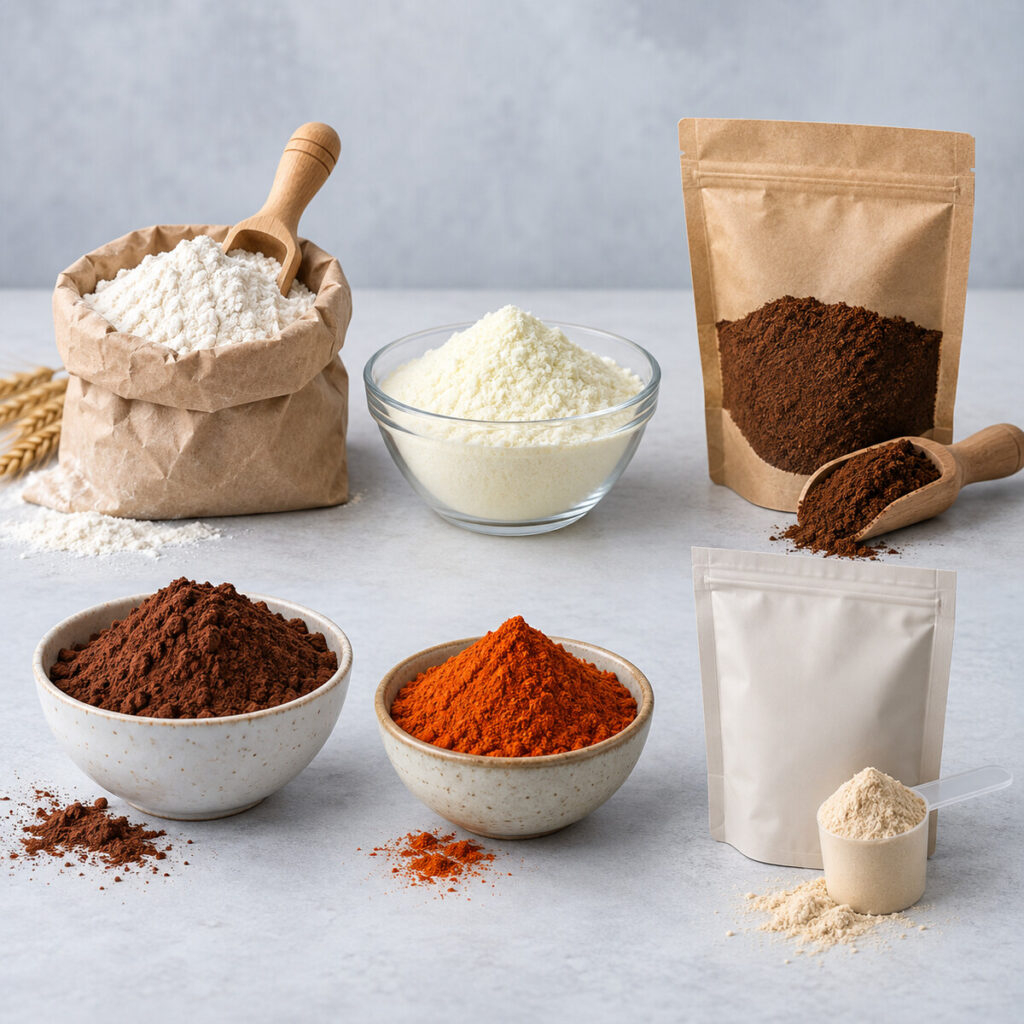
Choosing the right powder packing equipment can improve accuracy, reduce dust, protect product quality, and lower labor costs. However, powders do not all behave in the same way. Flour, milk powder, coffee, spices, protein powder, and detergent powder require different handling solutions.
If you are researching how to choose a powder packaging machine, you need to consider the product, filling system, bag style, production speed, accuracy, machine materials, and supplier support together. This guide explains the key points to confirm before requesting a quotation.
1. Understand Your Powder
The first step in learning how to choose a powder packaging machine is understanding the characteristics of your product. A supplier needs more than its name. Confirm whether the powder is:
- Free-flowing or non-free-flowing
- Fine, dusty, or easy to disperse
- Sticky or likely to form lumps
- Sensitive to moisture
- Corrosive or chemically active
- Food, pharmaceutical, cosmetic, or chemical grade
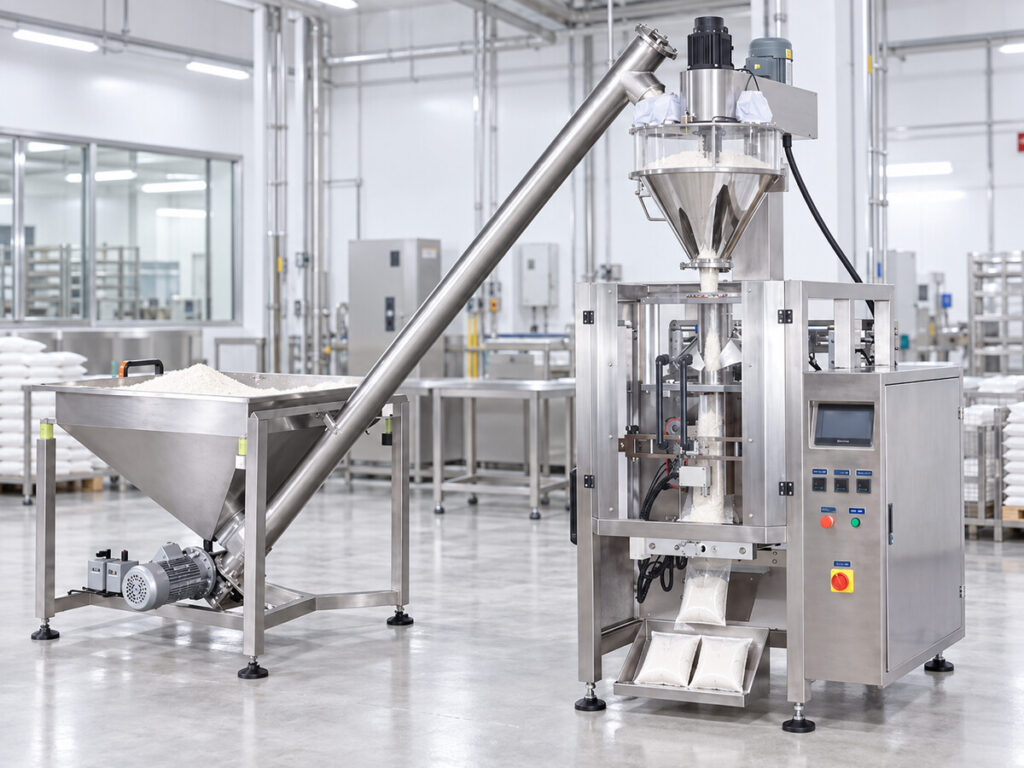
Free-flowing products may work with a volumetric cup or weighing system. Fine flour and milk powder normally require controlled screw dosing. When considering how to choose a powder packaging machine, sending a sample allows the supplier to test its density, flow, and dust level before recommending a machine.
2. Select the Correct Filling System
Understanding how to choose a powder packaging machine also means selecting the appropriate dosing method. The filling system directly affects accuracy, speed, and cleanliness.
An auger filler is commonly used for fine or non-free-flowing powders. A rotating screw dispenses a controlled volume into every bag. Servo-driven augers offer convenient adjustment and good repeatability, particularly when several filling weights are needed.
A volumetric cup filler may suit free-flowing powders with stable density. It is economical and relatively fast, but its accuracy can be affected when product density changes. Weighing systems are another option for certain free-flowing materials. Actual product testing is the safest way to choose between these systems.
3. Confirm Filling Weight and Accuracy
When deciding how to choose a powder packaging machine, specify the minimum and maximum package weight. A machine designed for 5–50 grams may not fill 1–5 kilograms efficiently.
Accuracy should be measured under realistic production conditions. It may change with powder density, humidity, filling speed, screw design, hopper level, and bag size. Ask the supplier to test multiple filling cycles and record the results. If you need several weights, confirm whether different auger screws or filling tubes are required.
4. Choose the Bag Type
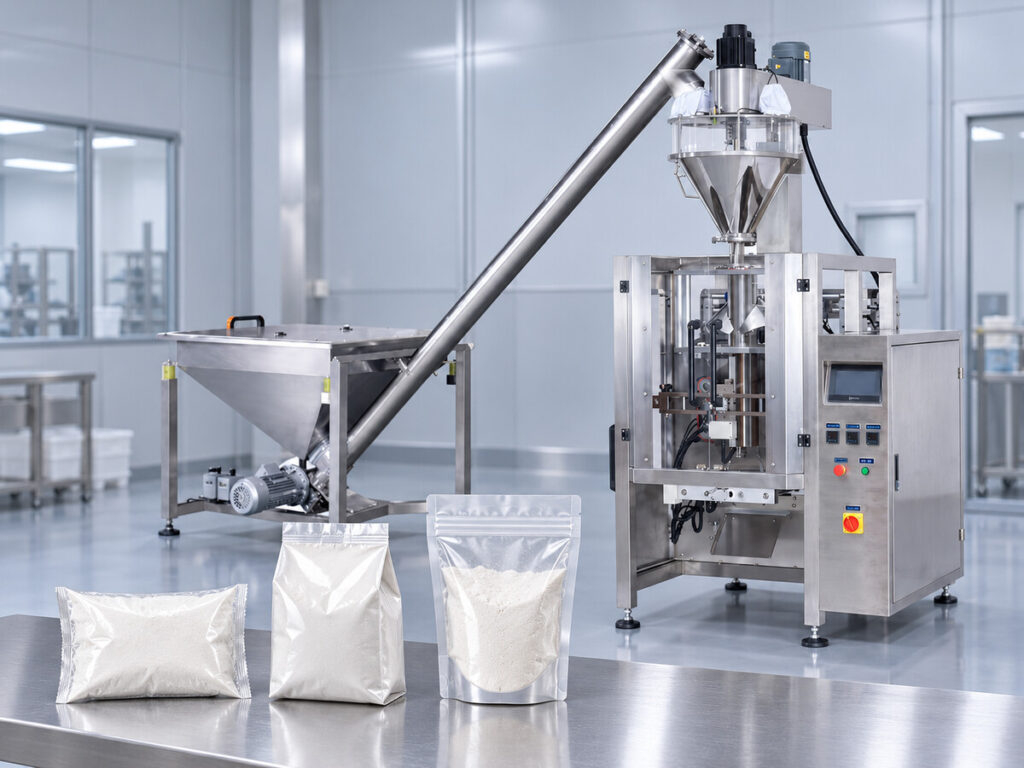
Bag format is another important part of how to choose a powder packaging machine. A vertical form fill seal machine automatically makes bags from roll-stock film. It is commonly used for pillow bags, gusset bags, and some block-bottom bags. It usually provides high efficiency and lower packaging-material costs.
A premade pouch machine handles bags manufactured in advance, including stand-up pouches, zipper pouches, and three-side-seal bags. These bags can create a more premium appearance but normally cost more than rollstock film.
Provide the bag width, length, film structure, thickness, and samples. PE film and laminated film have different sealing requirements, so compatibility must be confirmed.
5. Define a Realistic Speed
Buyers often focus on the maximum output, but how to choose a powder packaging machine should be based on stable production speed. Actual output depends on filling weight, powder flow, bag length, sealing time, and connected equipment.
Ask for the expected speed using your product and package size. The feeder, filler, packing machine, checkweigher, and conveyors must operate at compatible rates. Otherwise, one component can limit the complete line. Allowing some extra capacity for business growth is sensible, but an unnecessarily large machine may increase your investment without providing a practical benefit.
6. Consider Dust Control and Feeding
Dust control is essential when studying how to choose a powder packaging machine. Fine powder can enter the sealing area, produce weak seals, contaminate electrical components, and create an unhealthy working environment.
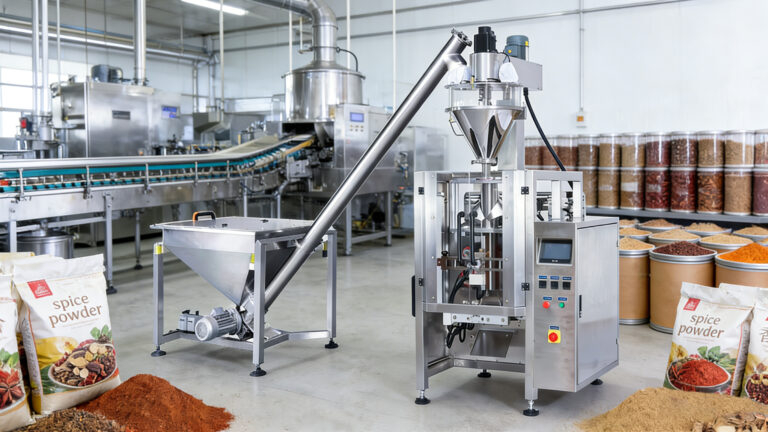
Depending on the product, useful solutions include an enclosed screw conveyor, covered hopper, sealed connections, dust extractor, anti-static device, and bag-mouth cleaning system. The feeding equipment should also maintain a stable level inside the hopper. This improves filling consistency and reduces manual work.
Confirm the available ceiling height and floor space because screw conveyors, vacuum feeders, and working platforms require different layouts.
7. Check Materials and Cleaning Design
Hygiene is central to how to choose a powder packaging machine for food and pharmaceutical products. Confirm the stainless-steel grade used for all product-contact parts.
Stainless steel 304 is widely used for food applications. Stainless steel 316 may be recommended for corrosive materials such as salt and certain chemicals. The hopper, auger screw, and filling tube should be easy to remove and clean, especially when one machine handles several recipes. Convenient cleaning reduces downtime and the risk of cross-contamination.
8. Review Factory Requirements
A complete understanding of how to choose a powder packaging machine includes your factory conditions. Tell the supplier your voltage, frequency, phase, compressed-air supply, ceiling height, floor space, and working environment.
Request a layout drawing if the solution includes several machines. Leave enough space for operation, maintenance, cleaning, product loading, and film replacement. A voltage stabilizer may be necessary where the electricity supply is unstable.
9. Evaluate the Supplier
Knowing how to choose a powder packaging machine is also about evaluating the company behind it. Before ordering, request:
- A test video using your powder and film
- A detailed configuration and quotation
- Electrical component brands
- English manuals and training videos
- A recommended spare-parts list
- Warranty and remote support terms
- Production time and shipping dimensions
Do not compare only the final prices. A useful how to choose a powder packaging machine comparison should check whether each offer includes the same filling equipment, conveyors, coding device, dust-control system, machine materials, and services.
10. Test Before Ordering
The most reliable answer to how to choose a powder packaging machine is an actual trial. Send enough product and packaging material for realistic testing.
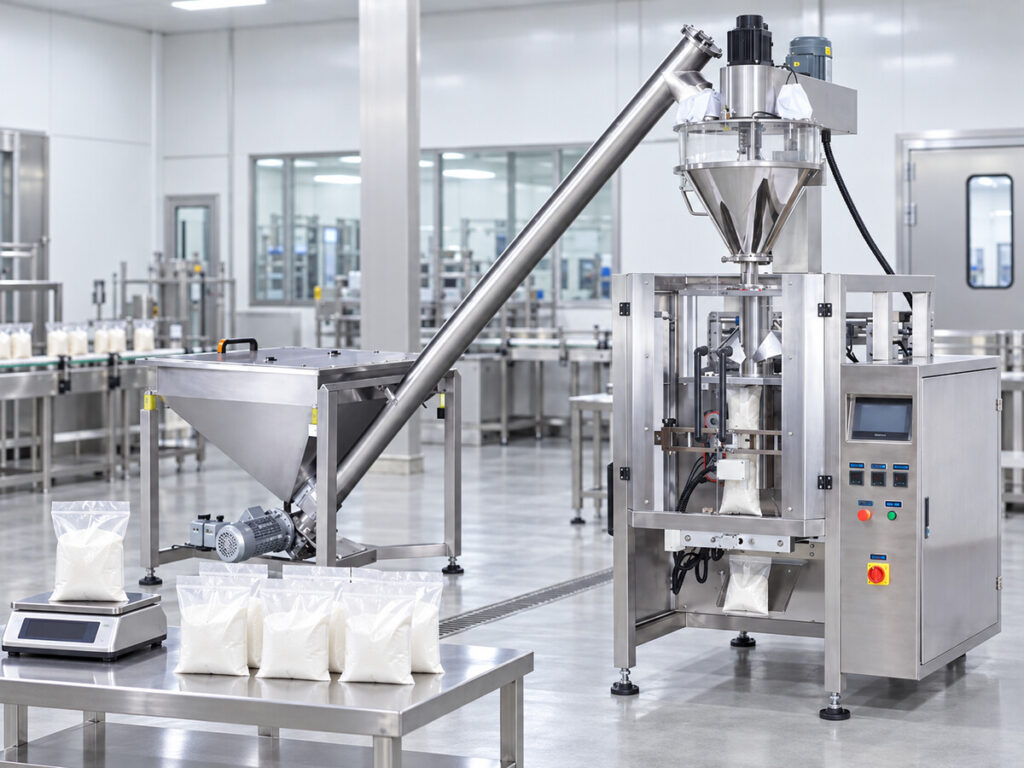
Check filling accuracy, stable speed, dust level, seal quality, bag appearance, coding position, and product loss. Ask to see the complete packing process rather than only finished samples. Testing helps identify problems early and establishes clear acceptance standards.
Frequently Asked Questions
Can one machine pack different powders?
Yes, when the products have compatible characteristics and the contact parts can be cleaned properly. A different auger screw, filling tube, or setting may be needed.
Can the machine produce different bag sizes?
Usually, yes. Bag length is often adjusted through the touchscreen. A new bag width normally requires another forming set and must remain within the machine’s operating range.
Which machine is suitable for flour or milk powder?
An auger filler combined with a VFFS or premade pouch machine is commonly used. Stable feeding, dust control, and sealing protection are particularly important.
Should I send product samples?
Yes. Powder flow, density, and dust can significantly affect machine performance, so testing is strongly recommended.
Conclusion
To understand how to choose a powder packaging machine, begin with your product characteristics, filling weight, bag format, required speed, accuracy, and factory conditions. Then evaluate the filling system, dust control, contact materials, cleaning design, and after-sales support.
For an accurate proposal, provide your product name, filling weight, bag dimensions, packaging material, desired speed, and voltage. With complete information and proper testing, you can select a reliable solution that delivers accurate filling and stable long-term production.





ID: 122932531