10+years in packaging machinery industry.
+86 13751707210 (Tel/ Whatsapp) Email:info@nolijmachinery.com

What Should You Check Before Buying a Packaging Machine from China?

China offers a wide range of packaging equipment for food, beverage, pharmaceutical, cosmetic, and industrial products. Buyers can find everything from small semi-automatic fillers to complete automatic weighing, filling, sealing, coding, and conveying lines. However, comparing quotations can be difficult because two machines that look similar may have very different components, performance, and service terms.
If you are considering buying a packaging machine from China, do not make your decision based on price alone. You need to confirm whether the proposed equipment matches your product, packaging material, output target, factory conditions, and long-term production plans. The following ten checks can help you reduce risk and choose a more suitable solution.
1. Define Your Packaging Requirements Clearly
The first step in buying a packaging machine from China is preparing complete product and package information. A reliable supplier cannot recommend the correct machine from a product name alone. This preparation makes buying a packaging machine from China more efficient and reduces unnecessary revisions.
Provide the following details:
- Product name, photos, and characteristics
- Minimum and maximum filling weight
- Bag type, width, and length
- Packaging film structure and thickness
- Required production speed
- Local voltage, frequency, and phase
- Available factory space and ceiling height
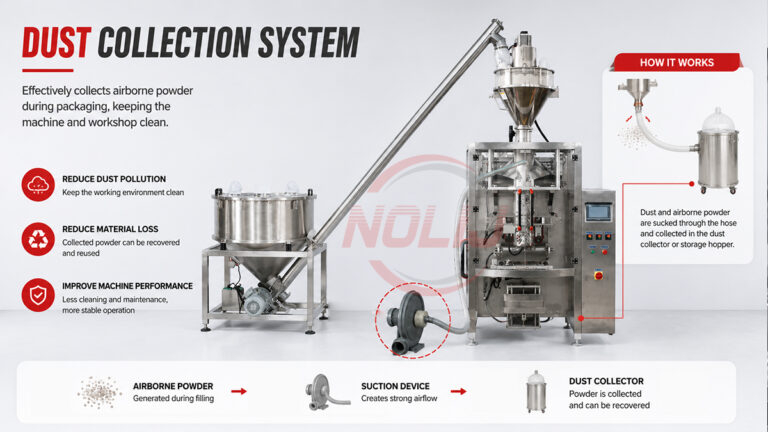
- Need for coding, gas flushing, dust extraction, or checkweighing
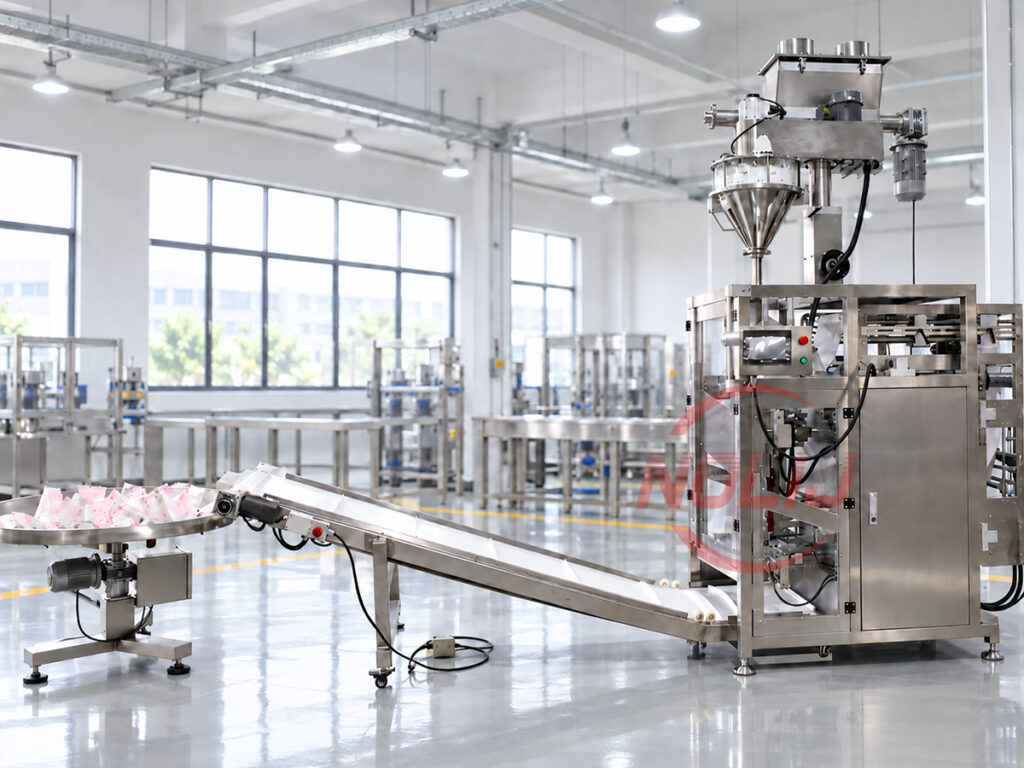
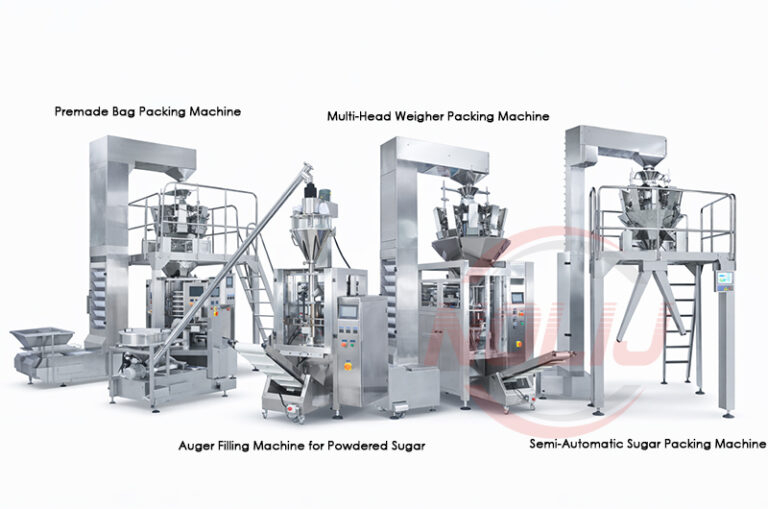
For example, free-flowing granules may use a multihead weigher, linear weigher, or volumetric cup. Fine powder often requires an auger filler, while liquids may need a piston pump or another filling system selected according to viscosity. Clear information prevents an unsuitable quotation at the beginning.
2. Confirm That the Machine Matches Your Product
Before buying a packaging machine from China, ask how the supplier selected the filling method. Different products may require different feeding, measuring, sealing, and cleaning designs.
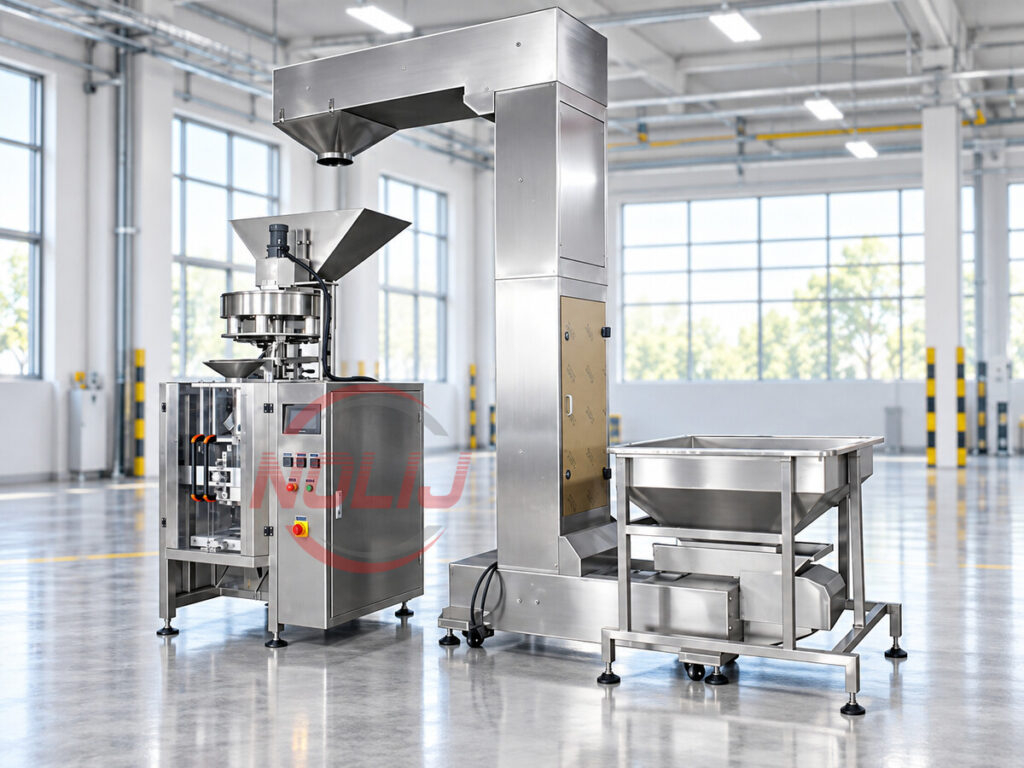
Powder density, granule size, liquid viscosity, product fragility, moisture, stickiness, and corrosiveness can all affect machine performance. Salt, for example, may require corrosion-resistant product-contact parts. Chips and other fragile snacks may need a gentle feeding and weighing system. A sauce containing solid particles requires a different filling solution from a smooth liquid.
Request an explanation of why each machine is included. A professional proposal should connect every piece of equipment to a specific production requirement. This product-machine match is fundamental to buying a packaging machine from China successfully.
3. Send Samples for a Real Machine Test
Testing is one of the most important parts of buying a packaging machine from China. Whenever possible, send enough product, empty bags, or rollstock film for a realistic trial.
During the test, check:
- Filling accuracy over multiple cycles
- Stable operating speed
- Bag dimensions and appearance
- Seal strength and leakage
- Product breakage or waste
- Powder dust or sealing contamination
- Date-code position and clarity
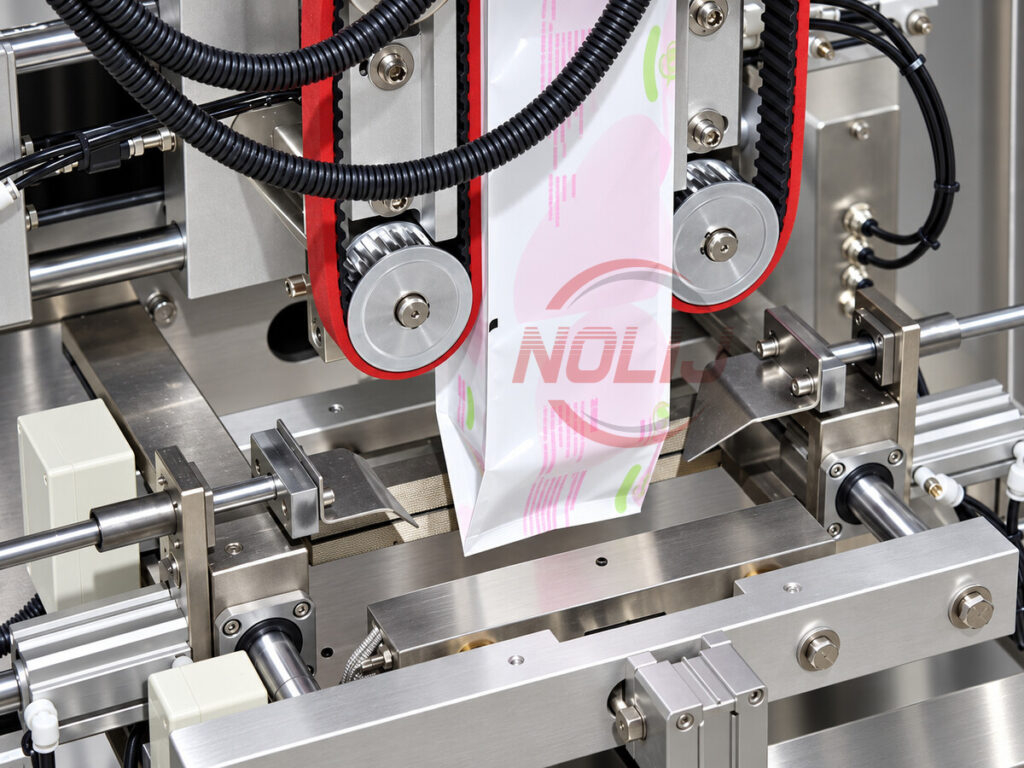
Ask for an unedited video showing the complete process, including product feeding, weighing or dosing, bag forming, filling, sealing, and discharge. Several attractive finished bags are not sufficient evidence of stable performance.
4. Compare the Detailed Configuration
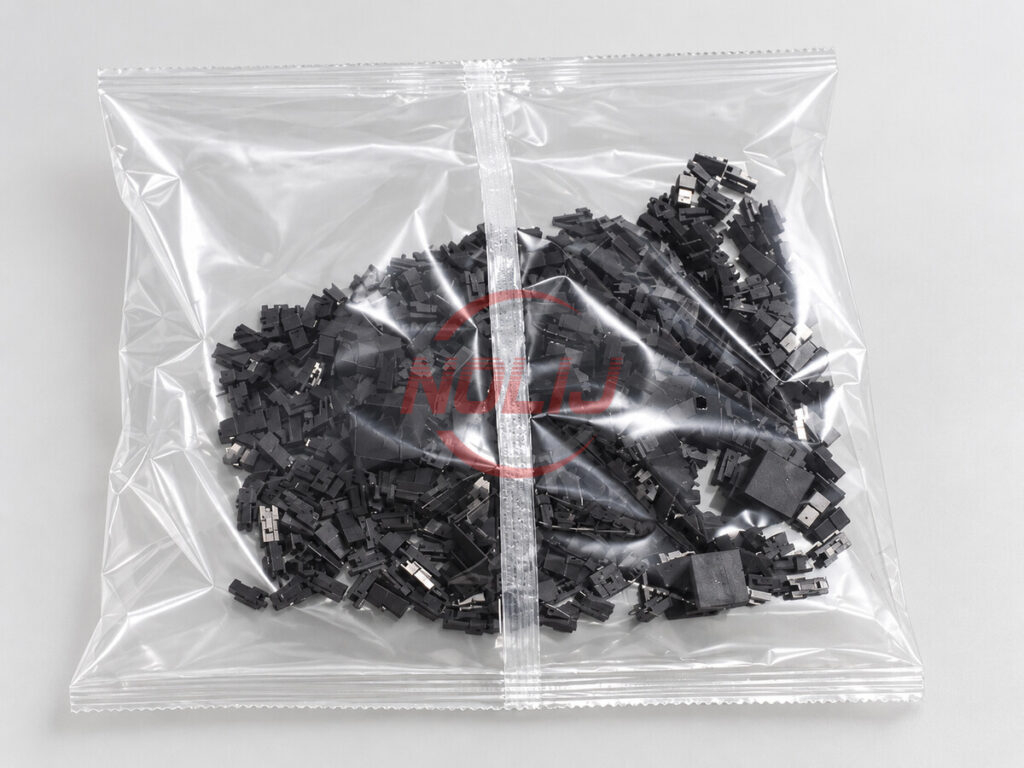
When buying a packaging machine from China, similar external designs do not guarantee the same quality. Request a detailed configuration list instead of comparing only machine names and prices.
Check the PLC, touchscreen, servo motors, frequency converters, sensors, pneumatic components, temperature controllers, and electrical protection devices. Confirm the stainless-steel grade used for product-contact parts and the machine frame. Also verify which conveyors, elevators, fillers, printers, platforms, and discharge systems are included.
A lower quotation may exclude essential equipment or use a simpler control and dosing system. Compare proposals line by line so that you are evaluating equivalent solutions. A standardized checklist makes buying a packaging machine from China easier to evaluate objectively.
5. Verify the Supplier’s Experience
Supplier evaluation is essential when buying a packaging machine from China. A company may manufacture one type of equipment well but have limited experience with your specific product or bag format.
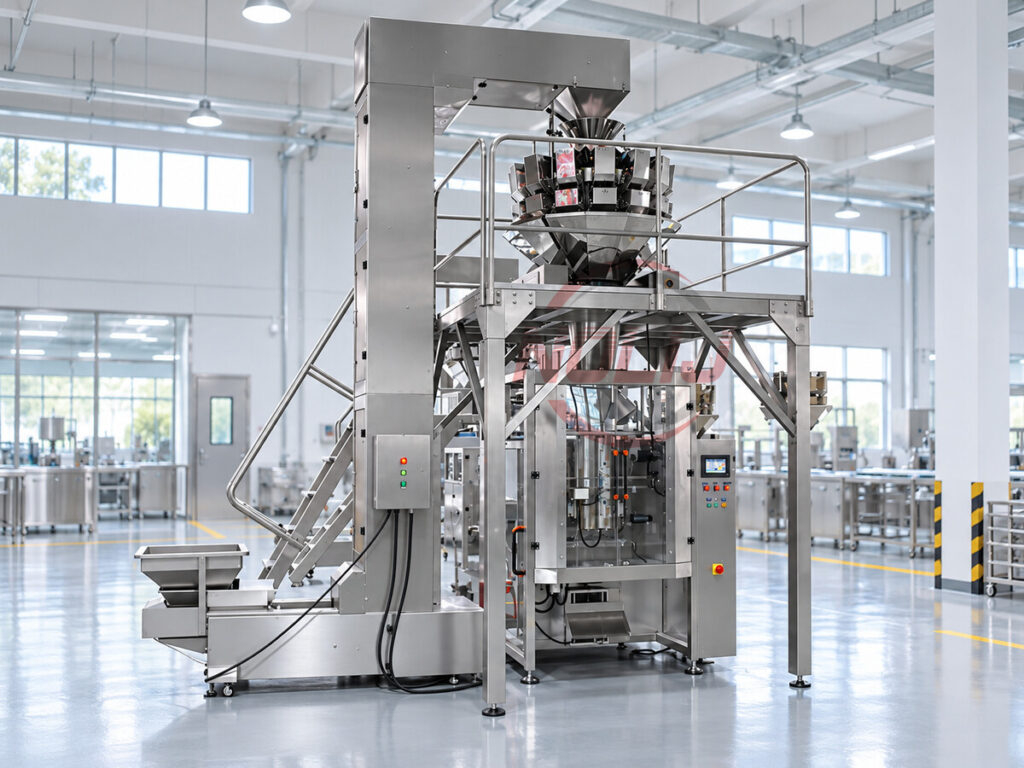
Ask for relevant machine videos, test records, technical drawings, and similar project references. During a video call, request to see the machine assembly or testing area. Pay attention to whether the sales and technical teams can explain practical issues such as film tracking, sealing temperature, product feeding, cleaning, changeover, and troubleshooting.
Business registration details, export experience, communication quality, and response speed also help you evaluate reliability. Experience with your application is usually more important than a large catalog containing hundreds of unrelated machines.
6. Check Safety and Compliance Documents
Another key part of buying a packaging machine from China is confirming the documents required in your market. Depending on the destination and industry, you may need a CE declaration, electrical diagrams, material certificates, food-contact information, safety instructions, or other compliance documents.
Do not assume that every certificate applies to the exact machine you are purchasing. Ask to review the available documents before paying the deposit. Also confirm the language of the operating manual, warning labels, touchscreen interface, and electrical drawings.
Compliance requirements vary by country, so buyers should verify local import and workplace rules before finalizing the order. Compliance planning should never be overlooked when buying a packaging machine from China.
7. Review Payment Terms and Contract Details
Safe commercial terms matter when buying a packaging machine from China. The quotation or contract should clearly state the machine model, complete configuration, price, payment schedule, production time, warranty, delivery terms, packaging method, and acceptance criteria.
Confirm whether the price is EXW, FOB, CIF, or door-to-door. Each term includes different costs and responsibilities. Before sending money, verify that the beneficiary name and bank account match the agreed supplier information. Be cautious if bank details change suddenly during the transaction.
The final balance should be linked to agreed inspection or testing procedures. Keep technical requirements and important promises in written documents rather than relying only on chat messages.
8. Confirm Shipping and Export Packaging
Shipping is often underestimated when buying a packaging machine from China. Request the packed dimensions, gross weight, HS code, loading plan, and departure port before calculating the total landed cost.
Machines should normally be protected against moisture, rust, vibration, and movement during transport. Confirm whether export wooden cases, vacuum film, anti-rust treatment, and internal fixing are included. For a complete line, ask the supplier to mark cables, pipes, and machine connections clearly to simplify installation.
Your total budget may also include inland transport, port charges, freight, insurance, import duties, taxes, customs clearance, and delivery to the factory.
9. Clarify Installation and After-Sales Support
Before buying a packaging machine from China, confirm how the equipment will be installed and commissioned. A compact machine may be set up through manuals and remote video guidance, while a complete line may require an engineer on site.
Ask what the warranty covers, how remote troubleshooting works, and how quickly technical questions are answered. Confirm whether English manuals, parameter lists, wiring diagrams, installation videos, and operator training are provided.
If overseas service is required, determine who pays for flights, accommodation, visas, local transportation, and service fees. These terms should be clear before the order is signed.
10. Order Spare Parts and Plan Maintenance
Long-term maintenance should be considered when buying a packaging machine from China. International delivery of a small component can take longer than expected, so request a recommended spare-parts list for one or two years of operation.
Common items may include heaters, thermocouples, cutting blades, sealing belts, relays, sensors, fuses, pneumatic seals, and printer consumables. The exact list depends on the machine. Ask the supplier to identify consumable parts separately from major components covered by warranty.
Operators should also receive a preventive-maintenance schedule covering cleaning, lubrication, fastener inspection, sealing-jaw checks, electrical inspection, and replacement intervals.
Frequently Asked Questions
Is it safe to buy packaging equipment from China?
Yes, provided that you verify the supplier, document the specifications, test the product and packaging material, use clear payment terms, and inspect the machine before shipment.
Should I choose the cheapest quotation?
Not necessarily. Compare the filling system, component brands, materials, included auxiliary equipment, testing, warranty, and service. The lowest initial price may create higher operating and maintenance costs later.
Is a factory visit necessary?
A visit is helpful for large projects, but it is not always essential. Live video inspections, product testing, technical documentation, and independent pre-shipment inspections can also reduce risk.
What should I send to receive an accurate quotation?
Send the product name and sample, filling range, bag dimensions, packaging material, target speed, voltage, factory layout, and any optional functions required.
Conclusion
Successful buying a packaging machine from China requires more than finding an attractive price. Define your requirements, confirm the filling and sealing solution, test real materials, compare detailed configurations, verify documents, and agree on clear commercial terms.
You should also plan shipping, installation, training, maintenance, and spare parts before production begins. A careful purchasing process reduces misunderstandings and helps ensure that the machine can deliver accurate, stable, and efficient packaging in your factory.





ID: 122932531